
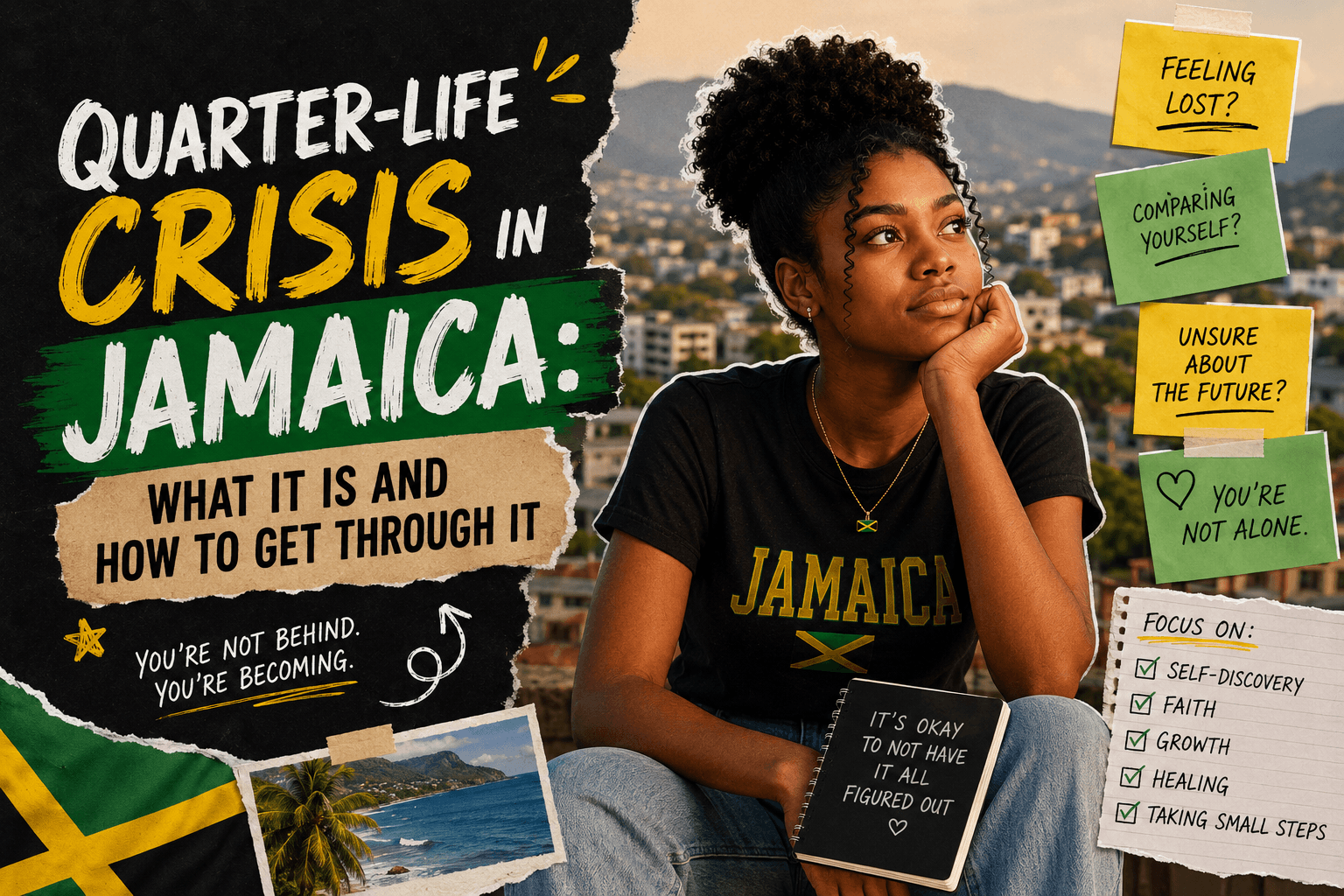
The quarter-life crisis is real, it is common, and in Jamaica; where the pressure to have your life together early is intense, it can feel particularly acute.
What It Actually Is
The quarter-life crisis typically hits in the early to mid-twenties. It is characterised by feeling stuck or directionless, questioning choices about education or relationships, comparing yourself to peers, anxiety about the future, and a sense that your life should feel more meaningful than it does.
It is not a sign that something is wrong with you. It is a sign that you are asking the right questions.
What Drives It
The transition is real. Moving from the structure of school to the openness of adult life is a genuine psychological shift. The scaffolding that told you what to do next is gone.
Comparison has been supercharged. Your grandparents did not know what every person they grew up with was achieving at age 25. You do, in real time, in high resolution.
The goalposts moved. The traditional markers of adult success feel further away for many young Jamaicans than for previous generations, for real economic reasons.
What Helps
Name it. Identifying what you are experiencing reduces its power. You are not broken. You are in a transition.
Take the next actionable step. Not the five-year plan. One step. Apply for one job. Take one course. Have one important conversation.
Invest in your mental health. If you are consistently struggling with anxiety, low motivation, or a loss of meaning, speaking to a professional is not weakness. It is strategy.
A Longer View
The quarter-life crisis passes for most people, not because life suddenly sorts itself out, but because they begin making choices and those choices build momentum. You are allowed to be in progress.
Comments
No comments yet. Be the first to share your thoughts.